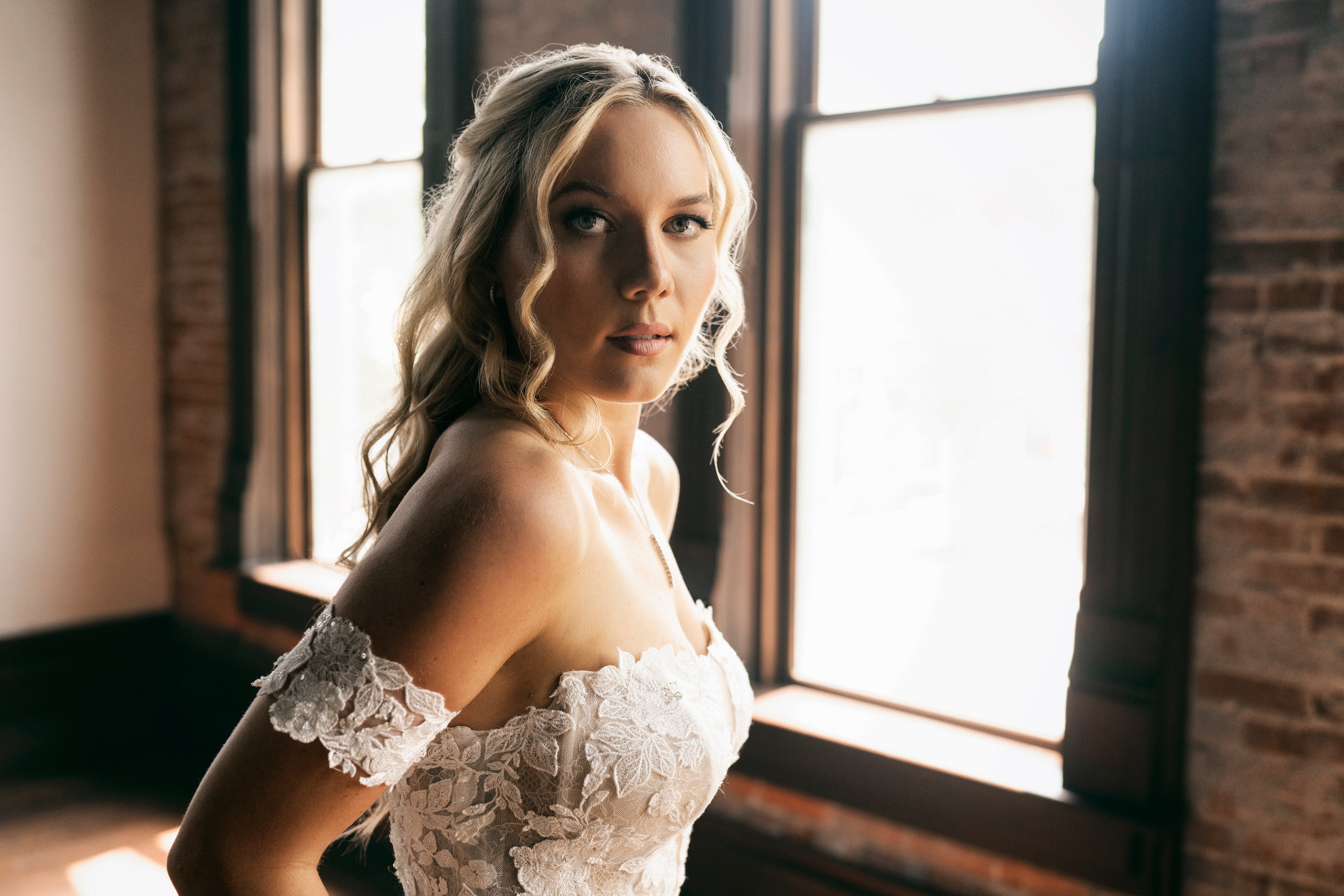
Lighting can completely transform your wedding portraits. The same location can feel soft and romantic, dramatic and cinematic, or flat and rushed. It all truly depends on the time of day. If you want portraits that feel glowy, dimensional, and timeless, your timeline matters just as much as your venue. Planning intentionally around natural light ensures your images look elevated without adding stress to your day.
The most sought after light is golden hour (you probably knew that though) that dreamy window just before sunset when the sun is low, warm, and diffused. During this time, skin tones glow, shadows soften, and everything takes on a romantic haze. Golden hour typically begins about 60–90 minutes before sunset, but the exact timing depends on your location and the season. The key is to step away from your reception for 10–20 minutes during this window. It doesn’t have to be long and drawn out, just enough time to soak in the light and capture portraits that feel cinematic and intimate.
A first look can dramatically expand your lighting options. By seeing each other before the ceremony, you can schedule portraits earlier in the day when you’re not rushed. In many cases, this allows time for full wedding party photos and family portraits before guests arrive which can free up golden hour for relaxed couple portraits instead of logistics. If you’re skipping a first look, be aware that post-ceremony portraits will need to fit between your ceremony end time and cocktail hour, which can feel tight depending on the season.
Seasonal sunset differences are often underestimated. In summer, sunsets can be as late as 8:30 or after 9:00PM in Northeast Ohio, meaning golden hour portraits could happen during dinner or later in the reception. In winter, the sun can set as early as 4:30 or 5:00 PM, especially in in the Akron, Cleveland, Columbus or Youngstown area, requiring earlier ceremonies if you want natural light portraits. Spring and fall offer more moderate timing but can change quickly depending on daylight saving time shifts. When building your timeline, always confirm the exact sunset time for your date and location if these photos are important to you, not just the month.
Weather and venue orientation also play a role. An open field or west-facing waterfront will give you direct golden light, while a forested venue or urban setting with tall buildings may block the sun earlier. Cloud cover can soften light beautifully, but heavy overcast or rain will eliminate golden hour glow altogether which is why flexibility in your timeline is invaluable. A skilled photographer can adapt to conditions, but giving them intentional light windows makes a noticeable difference.
Ultimately, the best portrait lighting isn’t about perfection, it’s about planning with purpose. Build your timeline around the light rather than trying to just fit portraits into gaps. Talk with your photographer early in the planning process, research your sunset time, and decide whether a first look will support the vision you have for your day. When lighting is a forethought, your portraits won’t just document your wedding day, they’ll feel like art crafted in the most beautiful light available.
Â
Leave a comment
0 Comments